
Welcome back! After our last edition, Michael Jordan was voted ALW’s Greatest Athlete of All Time with 29% of the vote! Thank you for the great feedback with many of you championing Jim Thorpe and Simone Biles as deserving a spot on the list. We’re thrilled to announce a new guest feature joining the newsletter! Keep an eye out for the official reveal next week. Today’s wisdom explores:
The Speed of Light
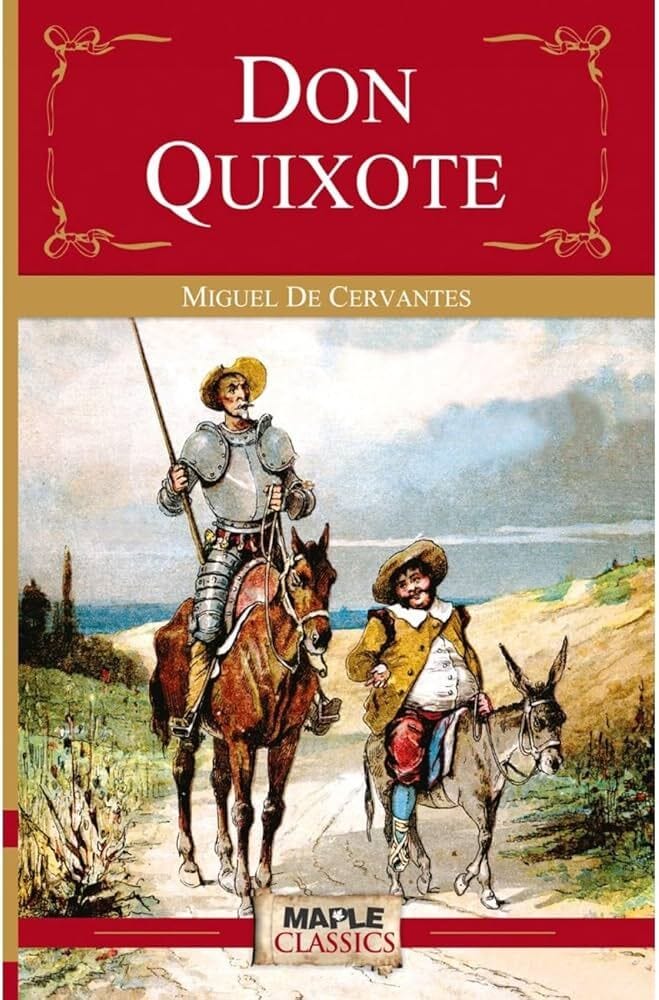
Don Quixote: The First Modern Novel
Pavlov’s Dogs
Grab your coffee and let’s dive in.
SCIENCE
🔦 The Speed of Light
In 1905, Albert Einstein realized that the universe has a built-in speed limit, and it is the most stubborn number in physics: 299,792,458 meters per second. To understand how fast this is, consider that light can circle the entire Earth seven times in a single second. But the truly strange thing about the speed of light is that it is a constant. Whether you are standing still or hurtling through space in a rocket, you will always measure light moving at exactly the same speed. This shattered our classical understanding of reality. Usually, if you throw a ball at 20 mph from a car moving 60 mph, the ball travels at 80 mph. Light refuses to play along. It is the fixed point around which the rest of the universe, including time and space itself, must bend to accommodate.
The reason you can’t break this limit comes down to the relationship between energy and mass. As an object with mass is accelerated, it doesn't just get faster; it effectively gets "heavier" in terms of its relativistic mass. The closer you get to the speed of light, the more energy is required to push you just a little bit faster. By the time you reach 99.9% of the speed, the energy required to bridge that final gap becomes infinite. To accelerate even a single electron to the speed of light would require more energy than exists in the entire universe. Only light can travel at this speed because photons, the particles that make up light, have zero rest mass.
The speed of light also represents the maximum speed at which information can travel. If the Sun were to suddenly vanish, the Earth would stay in its usual orbit and the sky would remain bright for eight minutes and twenty seconds. We wouldn't feel the gravity fail or see the darkness until that final information reached us. In this sense, it is the speed of now. Because light takes time to travel, looking at distant stars is literally looking into the past. We don't see the universe as it is, but as it was, layered in chronological echoes. While we continue to push the boundaries of travel to outer space and Mars, the laws of physics dictate that no matter how advanced our technology becomes, we will never be able to build a vehicle that reaches this ultimate speed.
Below - a great watch if you’d like to learn more about this.
LITERATURE
🛡️ Don Quixote: The First Modern Novel
In 1605, Miguel de Cervantes accidentally invented the modern novel. Don Quixote tells the story of Alonso Quijano, a minor nobleman who reads so many tales of knights and dragons that his brain "dries up," leading him to believe he is a knight-errant named Don Quixote. Accompanied by his squire, the pragmatic and illiterate peasant Sancho Panza, he sets off across the dusty plains of La Mancha to find monsters to slay. The genius of Cervantes was in the contrast: while previous literature dealt with perfect, static heroes or divine myths, Don Quixote focused on the internal life of a man who was deeply, hilariously, and tragically delusional.
The book’s most famous scene, Quixote charging at windmills he believes are giants, has become a universal metaphor for "tilting at windmills," or fighting imaginary enemies. Unlike the flat archetypes of the past, Quixote and Sancho actually influence one another over the course of their journey. By the second volume, Sancho begins to speak like a knight, and Quixote begins to doubt his own visions. Cervantes also played with layers that were centuries ahead of their time; in Volume II, the characters actually find out that a book has been written about their adventures in Volume I, and they argue with people who have read it. This was the birth of the self-conscious narrator, a technique that would later define the works of everyone from James Joyce to Salman Rushdie.
Beyond the comedy, Don Quixote endures because it touches on the fundamental human struggle between the "ideal" and the "real." We all live in the tension between the world as it is, the mundane La Mancha, and the world as we wish it to be. Quixote is a fool, but he is a noble one; he chooses to see a world of honor and enchantment where others see only sheep and inns. Dostoyevsky once called it the "final and greatest word of human thought," not because of its plot, but because it was the first time a book captured the complexity of the human soul. Every time you read a novel that focuses on a character’s inner growth or questions the nature of reality, you are reading a descendant of the man who thought he could fix the world with a rusty suit of armor and a cardboard helmet.
Our newsletter partner of the week.
Want to make the most of your mind? Ness Labs is a weekly newsletter by Dr Anne-Laure Le Cunff on mindful productivity and cultivating an experimental mindset. It delivers clear, science-based ideas you can use to think better, create consistently, and make progress without burning out. Subscribe for practical insights grounded in research.
PSYCHOLOGY
🐕 Pavlov’s Dogs
In the 1890s, physiologist Ivan Pavlov was studying canine digestion when he repeatedly noticed his dogs began to drool before the food even arrived. They would salivate at the mere sound of a lab assistant’s footsteps or the sight of an empty metal bowl. Pavlov recognized this as a profound "psychic secretion." He realized the dogs hadn't just learned that food was coming; their nervous systems had physically rewired themselves to treat a neutral trigger as if it were the meal itself. This discovery of "Classical Conditioning" revealed how an unconditioned stimulus (like food) can be paired with a neutral one (like a bell) until the brain creates a permanent bridge between the two. It is a fundamental survival mechanism; in the wild, the animal that learns to associate a specific rustle in the grass with a predator is the one that survives to pass on its genes.
We like to think of ourselves as rational actors, but much of our daily life is a series of Pavlovian echoes. Marketing is essentially a billion-dollar exercise in classical conditioning: pairing a brand logo (neutral stimulus) with feelings of status, sex appeal, or happiness (unconditioned stimuli) until the sight of a golden arch or a swoosh triggers a literal craving or a dopamine hit. This same engine drives our phobias and habits; a song playing during a past car accident can make your heart race years later. We are constantly and quietly being programmed by our environments, proving that while we possess complex thoughts, our bodies are still primed to respond to the bells of our personal histories.
However, you can intentionally hijack this mechanism to your advantage by creating environmental anchors. By drinking the same flavor of juice or playing a specific song only before you exercise, that stimulus becomes a biological start button for your motivation. Similarly, if you reserve a specific room or candle scent exclusively for deep work, your mind will eventually associate that environment with intense concentration. Over time, simply entering that space or smelling that scent will automatically quiet distractions and sharpen your focus. By choosing your own bells, you transition from a passive subject to the architect of your own habits.

Pavlov and his staff
We hope you enjoyed today’s edition. Thank you to everyone reading, sharing, and helping A Little Wiser reach new people every week.
Until next time…. - A Little Wiser Team