
Welcome back to the A Little Wiser newsletter! We hope you all enjoyed a restful, restorative holiday. We’ve missed being in your inbox, but we’re officially back to our regular M/W/F schedule. Today’s wisdom explores:
The Canal That Reshaped Global Trade
The House of Guinness
How Wool Is Made
Grab your coffee and let’s dive in.
HISTORY
🚢 The Canal That Reshaped Global Trade
For centuries, travel between the Atlantic and Pacific Oceans necessitated an 8,000-mile detour through the hazardous seas around Cape Horn. The narrow Isthmus of Panama presented a potential solution, yet transforming the dense jungle into a navigable passage proved deadly. During the 1880s, the French initiated construction of a canal, envisioning a straightforward sea-level trench. However, both disease and challenging geography thwarted their efforts. Yellow fever and malaria resulted in the deaths of an estimated 22,000 workers, and the project ultimately ended in scandal and bankruptcy.
When the United States assumed control in 1904, the project shifted from a focus on brute excavation to an emphasis on integrated systems. Under the leadership of Dr. William Gorgas, mosquito control measures transformed the Panamanian jungle into a viable construction site. A pivotal engineering innovation followed: instead of excavating a sea-level canal, American engineers effectively constructed a staircase of water. In the Panama Canal, ships enter large concrete chambers known as locks, where gravity facilitates their movement. Valves open to allow fresh water from Gatun Lake to fill the chambers, raising ships by buoyancy to 85 feet above sea level. After traversing the artificial lake, the process is reversed, lowering vessels back to ocean level. Each transit thus functions as a massive hydraulic elevator, lifting and lowering the world's largest vessels through the heart of the Americas.
On August 15, 1914, the canal officially connected the Atlantic and Pacific Oceans, and the economic impact was immediate. A voyage from the East Coast to the West Coast of the U.S. that previously required months could now be completed in a fraction of the time. The cost of a single transit ranges from $150,000 to over $1 million, depending on vessel size, cargo, and market demand. In 2023, the canal generated nearly $5 billion in revenue for Panama, serving as a central component of the national economy. However, the system's efficiency also constitutes its primary vulnerability. The locks rely on rainfall to replenish Gatun Lake, and droughts associated with climate change have necessitated restrictions on vessel size and the number of daily crossings. Currently, the canal remains a critical chokepoint for global shipping. Approximately 6% of global maritime trade and around 40% of all U.S. container traffic passes through the canal, rendering it both a remarkable engineering achievement and a critical strategic asset.

Cross-Section of the Panama Canal
BUSINESS
The House of Guinness
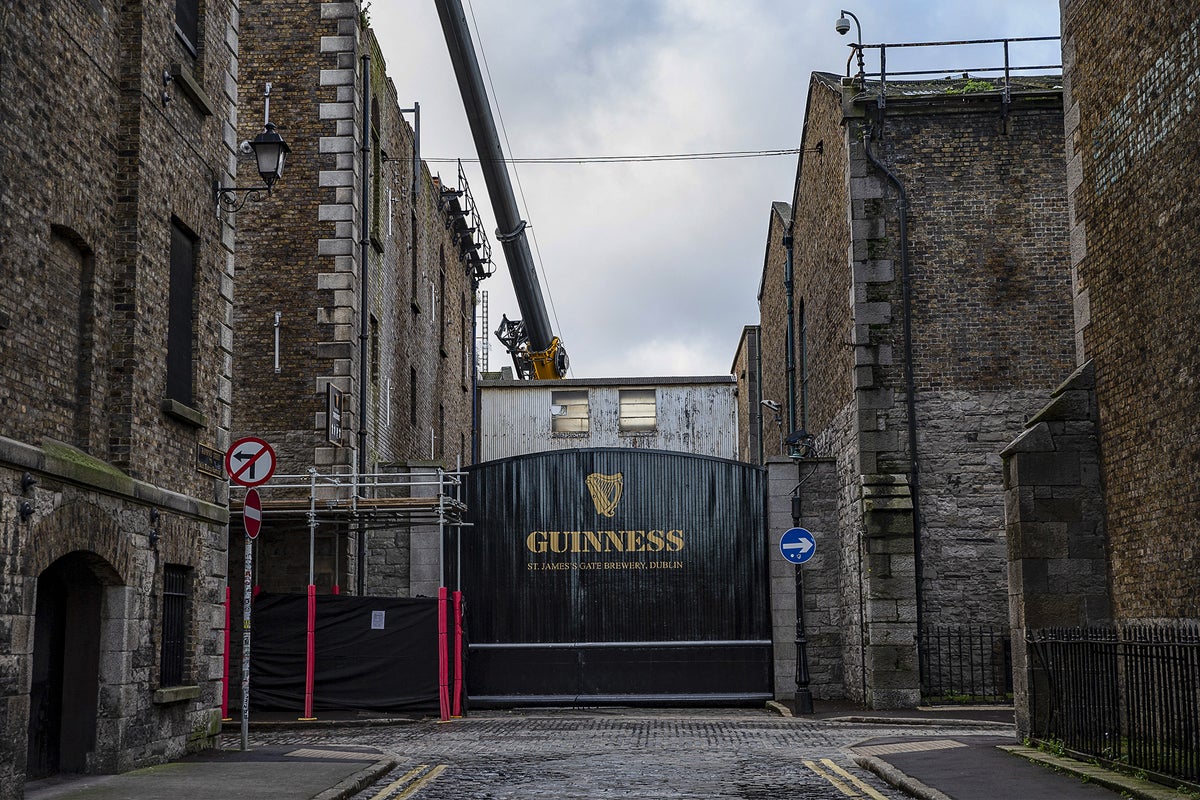
In 1759, Arthur Guinness signed what may be the most audacious lease in business history: 9,000 years at £45 a year for the St. James’s Gate brewery in Dublin. The site was rundown, barely productive, and far from an obvious foundation for an empire. Guinness, the son of a brewer, had a contrarian insight. The dark porter that was popular with London dockworkers was robust, filling, and far better suited to the rhythms of industrial life than fragile ales. At a time when beer quality was unreliable and spoilage common, he treated brewing as a discipline.
Guinness embraced industrial thinking earlier than almost any food or drink company. St. James’s Gate became a city within a city, complete with railways, power plants, and laboratories. The brewery hired chemists to study yeast and fermentation decades before “food science” was a field. In fact, it was a Guinness brewer who developed the famous Student’s t-test, a cornerstone of modern statistics. William Sealy Gosset discovered a mathematical formula that allowed Guinness to test small batches of ingredients (like a handful of hops) and still be 99% sure the entire vat of beer would taste right. This "small sample" math is now used in everything from medical trials to A/B testing for websites. In 1886, the company made a radical decision to stop brewing everything except stout. The beer became instantly recognizable, and trust in the product deepened. By the early 20th century, Guinness was the largest brewery in the world, exporting across Africa, the Caribbean, and Asia.
Beyond brewing, Guinness famously shaped global culture when Managing Director Sir Hugh Beaver realized that a definitive book of superlatives could settle heated pub disputes. By documenting the world’s "fastest" and "tallest," he transformed a clever marketing tool into the Guinness Book of Records, a global phenomenon that has far outlasted the typical advertising campaign. During twentieth-century grain shortages and economic recessions, while competitors diluted their products, Guinness maintained its standards. This steadfastness, rooted in Arthur Guinness’s original insistence on uncompromising quality, led to the famous slogan "Guinness is Good for You." Few products have achieved global expansion while preserving such distinctive characteristics.
Below - an interesting read about the Guinness brewer William Sealy Gosset’s discovery.
If you love A Little Wiser, check out this newsletter: Chief Rabbit.
Every week, Chief Rabbit shares stories and insights that help you understand why you're struggling and how to get out of your own way.
30,000+ readers. Zero self-help nonsense. Subscribe: chiefrabbit.com
HOW IT WORKS
🧶 How Wool Is Made
Roughly 1.1 million tons of clean wool are produced worldwide each year, supporting millions of livelihoods from Australia to Central Asia. A single sheep yields between 2 and 10 kilograms of fleece annually, translating to anywhere from $30 to several hundred dollars per animal. Wool lost ground in the mid-20th century to synthetics that were cheaper and easier to care for, but economically and scientifically, it never stopped being valuable.
The process behind wool is far more intricate than it looks. It begins with shearing, usually once a year, a skilled job that must be fast and precise to avoid harming the animal. The raw fleece is then scoured in hot water to remove dirt and grease, extracting lanolin, a waxy substance that now underpins a global cosmetics and pharmaceutical market worth hundreds of millions of dollars. After washing, the fibers are carded and combed, aligned and sorted by length and fineness. Fine fibers are spun into yarn for clothing; coarser fibers are reserved for carpets, insulation, or upholstery. What makes wool exceptional lies in its microscopic structure. Each fiber is naturally crimped like a spring, trapping pockets of air. This gives wool its rare combination of warmth without weight, breathability, moisture absorption, odor resistance, and natural fire retardancy. Despite decades of material science, no synthetic fiber has successfully replicated all these properties in a single material.
Merino wool, prized for its ultra-fine fibers, makes up less than 10% of global production. However, it accounts for roughly 40–50% of the world's apparel wool production because it's soft enough to wear directly on skin. Cashmere, from goats rather than sheep, is even finer and rarer. Stronger crossbred wools are less glamorous but economically vital, forming the backbone of carpets, blankets, and interiors. Wool's reach extends far beyond clothing. It soundproofs concert halls, insulates buildings, lines car interiors, stabilizes eroding soil, and even absorbs oil spills thanks to its ability to bind liquids. Unlike synthetics, wool is renewable and biodegradable. In an age obsessed with inventing new materials, wool stands as a quiet reminder that some of humanity's most sophisticated technologies were perfected by evolution long before we learned to name them.
Below - This graph tracks the average auction price of wool. The overall trend reflects wool's transition from a premium global commodity to a niche material facing intense competition from cheaper synthetic fibers.

Real Average Wool Auction Prices: RPI Adjusted (1952–2018)
The 1950s Peak (The Korean War): Prices skyrocketed because the U.S. began massive strategic stockpiling of wool to create uniforms for soldiers during the Korean War.
The 1973 Oil Crisis made synthetic fibers (which are petroleum-based) more expensive, briefly driving people back to wool. At the same time, major wool-producing countries like Australia introduced "Floor Price" schemes to artificially raise prices.
We hope you enjoyed today’s edition. Thank you to everyone reading, sharing, and helping A Little Wiser reach new people every week.
Until next time…. - A Little Wiser Team
🕮 Three lessons. Three times a week. Three minutes at a time.
💌 Enjoyed this edition? Share it with someone curious.

Key takeaways
The Canal That Reshaped Global Trade
the House of Guinness
How Wool Is Made
FAQ
Q: What should I know about The Canal That Reshaped Global Trade?
A: The Canal That Reshaped Global Trade is explained in this A Little Wiser edition.
Q: What should I know about the House of Guinness?
A: the House of Guinness is explained in this A Little Wiser edition.
Q: What should I know about How Wool Is Made?
A: We hope you all enjoyed a restful, restorative holiday.
Q: Why does The Canal That Reshaped Global Trade matter?
A: The Canal That Reshaped Global Trade is explained in this A Little Wiser edition.
About the authors
Primary: Callum Graham (Bristol Economics). A Little Wiser editions are written with Lucas Garcia (Harvard Philosophy), Callum Graham (Bristol Economics), Janet Gelder (Professor of History, University of Hawaiʻi), and Louise Graham (PhD Researcher, University of Texas).