
Welcome back to A Little Wiser. Thanks for all your continued support and feedback. Feel free to reply and recommend a lesson, we read every response. Today’s wisdom explores:
How AI is Decoding the Animal Kingdom
The Secret School Curriculum of the Elite
The Ski Resort Industry in 2026
Grab your coffee and let’s dive in.
SCIENCE
🐾 How AI is Decoding the Animal Kingdom
For centuries, humans have viewed animal communication as a collection of simple, instinctual triggers such as growls for anger or chirps for mating. Current research suggests that the perceived language barrier is less a reflection of animal simplicity but rather a result of humans’ limited capacity to process their complex signaling. Enter Generative AI. By using the same transformer models that power ChatGPT, biologists are now treating animal sounds as massive, unstructured data sets. Organizations like the Earth Species Project are feeding thousands of hours of bioacoustic recordings into AIs as we move from observing nature to essentially "Google Translating" the wilderness.
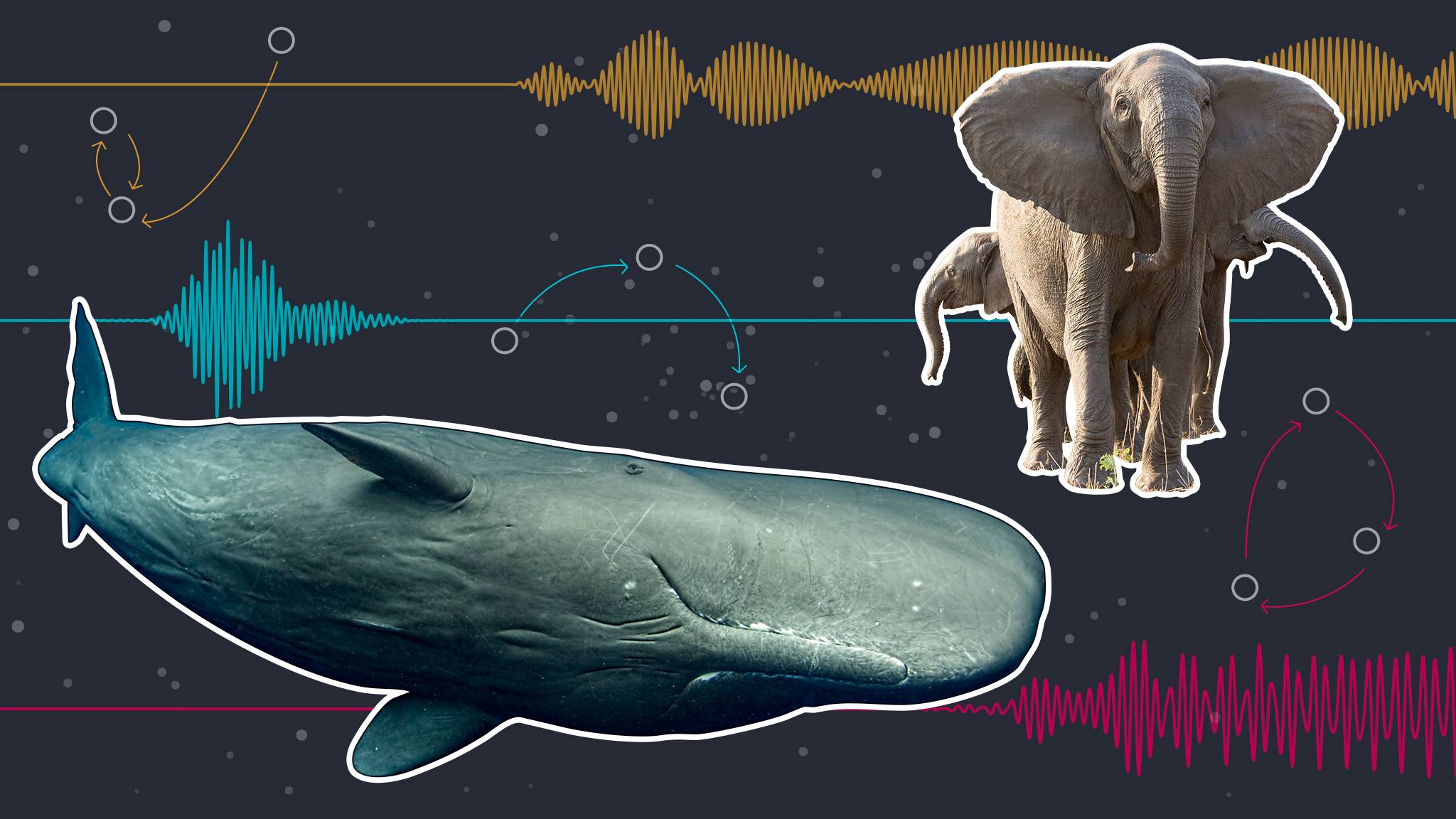
The most stunning breakthroughs are happening in the deep ocean. Sperm whales communicate using rhythmic sequences of clicks known as codas. For decades, these sounded like random static to human ears, but AI analysis has revealed a phonetic alphabet hidden within the noise. Whales vary the tempo and rhythm to convey specific information, much like human vowels and consonants. On land, researchers have used AI to discover that African elephants have unique "names" for one another. Unlike parrots or dolphins, which often mimic the sound of the individual they are calling, elephants use specific, low-frequency rumbles that don't sound like the recipient at all suggesting a capacity for abstract, symbolic thought. Meanwhile, at Tel Aviv University, AI has been used to translate the chaotic "screaming matches" in fruit bat colonies. The algorithms revealed that bats are engaged in highly specific arguments over four distinct topics: food, sleeping positions, unwanted mating advances, and personal space.
AI is also decoding the "waggle dances" of bees and the subtle body language of primates. By analyzing high-speed video, AI can detect micro-expressions in chimpanzees that are invisible to the naked eye, revealing a social emotional range far closer to our own than previously thought. As we begin to translate the natural world, we face a profound ethical shift: once we can read the distress of a forest or the specific warnings of a pod of whales, it becomes much harder to treat the animal kingdom as a silent resource. We are finally moving from being the world’s loudest speakers to its most attentive listeners.
Below - a great interactive article that delves into this further.
CULTURE
🎭 The Secret School Curriculum of the Elite
At the recent Grammy Awards, the spotlight fell on three British women who dominated the night: Lola Young, Olivia Dean, and FKA twigs. While their sounds range from raw neo-soul to avant-garde electronic, they share a singular DNA. All three are alumni of The BRIT School in Croydon. Seeing three winners from one institution in a single night isn’t an anomaly as the school has been churning out names like Adele, Amy Winehouse, and Tom Holland for decades. In the US, the San Francisco and Oakland Schools of the Arts (SOTA) have mirrored this, producing stars like Zendaya and Kehlani with a consistency that begs a difficult question: Is the industry rewarding raw talent, or simply the most refined institutional pipelines?
What makes these schools "elite" isn't just the talent of the students, but a radical approach to the curriculum. At The BRIT School, the National Curriculum is often siphoned through the arts, math students might calculate the acoustics of a theater, while history students analyze the evolution of protest music. It’s an immersion that treats creativity as a professional discipline rather than a hobby. In the US, the Phillips Academy (with alumni including Mark Zuckerberg and George W Bush) uses the niche Harkness Method: students and teachers sit around a massive oval table and the teacher is forbidden from lecturing. Instead, the students must drive the entire conversation through Socratic dialogue. If a student doesn't speak, the lesson fails. This forced participation builds the hyper-confidence that allow alumni to walk into any boardroom or onto any stage and command the room.
The dominance of these schools has sparked a fierce political row over social mobility. Historically, British music was a ladder for the working class (think The Beatles or Oasis). Today, data shows that people from privileged backgrounds are twice as likely to land a job in the arts. On one hand, these schools, many of which are state-funded or offer massive scholarships, provide specialized training that a standard neighborhood school simply cannot match. They provide professional equipment, industry mentors, and, most importantly, a peer group of hyper-ambitious creatives. However, as the cost of living in creative hubs like London, New York, and San Francisco skyrockets, these schools risk becoming gatekeepers. Even when the tuition is free, the barrier to entry is often a childhood of expensive private lessons and the geographical luck of living near the campus.

Brit School Alumni
BUSINESS
⛷️ The Ski Resort Industry in 2026
Skiing was originally a matter of survival, a way for hunters in Scandinavia to traverse deep snow. It wasn't until the 1930s that the industry as we know it took flight, spurred by an unlikely invention. Averell Harriman, chairman of the Union Pacific Railroad, wanted to boost rail passengers during the Great Depression. He hired a Swiss engineer to build the first overhead chairlift in Sun Valley, Idaho, using a design originally intended for loading bananas onto ships. This transformed skiing from an arduous trek into a repeatable, high-volume luxury.
Today, the industry is undergoing a "SaaS-ification" (Skiing as a Service). Modern giants like Vail Resorts (Epic Pass) and Alterra (Ikon Pass) have moved away from selling day tickets to a subscription-style model. By selling passes months before the first snowflake falls, these companies have de-risked their billion-dollar operations. This consolidation has effectively squeezed out smaller "mom-and-pop" hills that can’t compete with the all-you-can-ski convenience of the big conglomerates. However, the industry is now racing against a catastrophic geography of its own: Climate Change. With shorter winters, resorts are increasingly reliant on technical snow, a dense, compact artificial crystal created by high-pressure cannons. While this saves the season, it comes at a staggering cost. Some major resorts now spend over $500,000 a month on electricity just to keep their slopes white. Furthermore, this artificial snow is more dense and harder than the natural stuff, which can actually suffocate the mountain soil and prevent spring vegetation from growing back.
To survive, the industry is pivoting toward high-altitude lifestyle hubs, shifting from selling mere lift tickets to offering year-round residency. In premier destinations like Verbier and Aspen, the rise of digital nomads working from the mountains has prompted the opening of international schools and high-speed coworking stations. This physical infrastructure is being aggressively rebuilt for the warmer months; beyond traditional bike trails, resorts are installing gravity-driven alpine coasters and luxury wellness retreats that rival five-star urban spas. Some locations, such as Courmayeur in Italy, even provide smart-working packages that include private offices at 11,000 feet paired with mid-day outdoor excursions. Ultimately, the goal is to decouple financial success from snowfall, transforming the traditional ski resort into a four-season entertainment campus where skiing is merely a nostalgic feature of a broader mountain lifestyle.

We hope you enjoyed today’s edition! If you did, feel free to share it on social media or forward this email to friends!
Until next time... A Little Wiser Team